Who Gets Left Behind: The Public Health Cost of Ancestry Gaps in Genomic Research

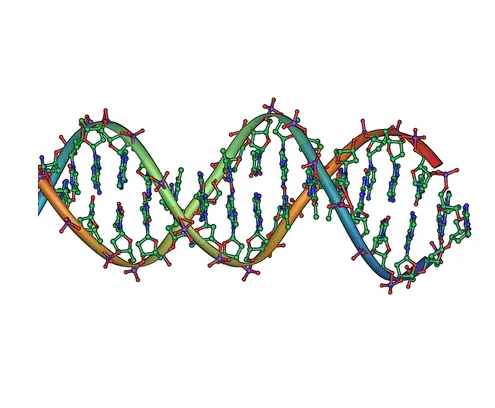
Photo: Holger Krisp, CC BY 3.0, via Wikimedia Commons
Precision medicine carries an implicit promise: that medical care can be tailored to the individual, informed by the specific genetic architecture that makes each patient unique. It is a compelling vision, and in certain contexts it has already been realized. But the degree to which that promise is kept depends heavily on a factor that has received insufficient attention in public discourse—whether the individual seeking genomic-guided care belongs to a population that has been adequately represented in the research underlying those tools.
For tens of millions of Americans, the answer to that question is no.
The Scope of the Representation Problem
The foundation of modern genomic medicine is the genome-wide association study, or GWAS—a research design that compares genetic variants across large groups of individuals to identify associations between specific variants and specific traits or diseases. The validity of these associations, and the clinical tools derived from them, depends on the populations from which study participants are drawn.
A landmark analysis published in the American Journal of Human Genetics found that for the majority of the history of GWAS research, upward of 75 to 80 percent of participants were of European ancestry. More recent assessments suggest that while this proportion has declined as diversity initiatives have expanded, individuals of European descent remain substantially overrepresented relative to their share of the global—and American—population.
The practical consequences are not abstract. Polygenic risk scores, which aggregate information from hundreds or thousands of variants to estimate an individual's inherited susceptibility to conditions such as coronary artery disease, type 2 diabetes, or breast cancer, are calibrated on the populations in which the underlying GWAS were conducted. When applied to individuals of African, Hispanic, South Asian, or East Asian ancestry, these scores frequently perform less accurately—sometimes substantially so—because the variant frequencies and linkage disequilibrium patterns that underpin the scores differ across ancestry groups.
Variant Interpretation and the Ancestry Blind Spot
The representation gap also distorts how individual genetic variants are classified in clinical settings. When a variant is observed rarely or not at all in genomic reference databases, it is more likely to be classified as a variant of uncertain significance. Because reference databases have historically over-sampled European populations, variants that are common in African American, Latino, or Indigenous communities may appear rare in the literature—not because they are genuinely rare, but because the populations carrying them have been undersampled.
This dynamic has a documented clinical consequence. Research has shown that Black patients undergoing clinical cardiac genetic testing receive a higher proportion of variants of uncertain significance compared with white patients tested for the same conditions. In some cases, variants that had been misclassified as pathogenic based on their apparent rarity in European-ancestry databases were subsequently reclassified as benign once data from more diverse populations became available. The inverse is also true: variants that are genuinely pathogenic in non-European populations may go unrecognized because the populations in which they cause disease have not been studied at sufficient scale.
For clinicians and genetic counselors, uncertain classifications create real clinical dilemmas. A variant of uncertain significance in a gene associated with inherited cardiomyopathy, for example, may lead to unnecessary surveillance procedures, heightened patient anxiety, or—if dismissed without adequate follow-up—a missed diagnosis with serious consequences.
Pharmacogenomics and Differential Drug Response
The equity implications extend into pharmacogenomics, where the stakes can be immediate and life-threatening. Genetic variants that influence how the body metabolizes medications are distributed unevenly across ancestry groups, and the clinical guidelines designed to translate this information into prescribing decisions have been developed primarily from data collected in European and East Asian populations.
Variants in the CYP2C19 gene, which encodes an enzyme responsible for metabolizing a range of commonly prescribed medications including the antiplatelet drug clopidogrel, differ substantially in frequency across ancestry groups. Guidelines for clopidogrel dosing based on CYP2C19 genotype have been validated most thoroughly in populations of European and East Asian ancestry. For patients of other ancestries, the predictive validity of these guidelines is less well-established, and clinicians may be making medication decisions based on frameworks that were not designed with their patients in mind.
Similar limitations apply to pharmacogenomic guidance for antidepressants, opioid analgesics, and chemotherapy agents—medications whose appropriate dosing and selection can be genuinely consequential.
Recent Efforts to Diversify the Evidence Base
The research community has not been passive in the face of these criticisms, and several significant initiatives have been designed specifically to address the ancestry gap. The National Institutes of Health's All of Us Research Program is one of the most ambitious, having enrolled over 700,000 participants with an explicit commitment to recruiting from populations historically underrepresented in biomedical research. The program's genomic dataset, when fully analyzed, is expected to substantially expand knowledge of genetic variation across the diverse ancestry groups that constitute the American population.
The H3Africa consortium has worked to build genomic research infrastructure on the African continent, generating data from populations that harbor the greatest human genetic diversity of any region in the world—a resource that has both intrinsic scientific value and direct relevance to the health of African American communities whose ancestral genomes are most closely related to those populations.
The Million Veteran Program, administered through the Department of Veterans Affairs, has assembled one of the most ancestrally diverse biobanks in the United States, with substantial representation from Black and Hispanic veterans. Studies emerging from this resource have already identified novel disease associations that were invisible in earlier, less diverse datasets.
A Public Health Imperative, Not a Scientific Footnote
It would be a mistake to frame the ancestry gap in genomic research as a technical limitation awaiting a technical fix. The communities most affected by this gap—Black Americans, Hispanic Americans, Indigenous populations, and recent immigrant communities from Asia and Africa—are also, in many cases, the communities bearing the greatest burden of the chronic diseases that precision medicine aspires to address. Cardiovascular disease, type 2 diabetes, and certain cancers disproportionately affect these populations. The tools that genomic medicine has developed to improve outcomes for these conditions work least well for the people who need them most.
Addressing this requires more than expanding recruitment into existing research frameworks. It requires investing in community-based research partnerships that build trust in communities with well-founded historical reasons to be cautious about participation in biomedical research. It requires developing ancestry-aware computational methods that perform equitably across diverse populations. And it requires recognizing that the scientific and ethical dimensions of this problem are inseparable—that a genomic medicine that works well for some Americans and poorly for others is not precision medicine at all, but a new mechanism for reproducing old inequities.
The promise of genomics is a biology-based path toward better health for every patient. Fulfilling that promise means ensuring that the science underlying it was built with everyone in mind.