The Restless Genome: How Mobile DNA Elements Are Linked to Cancer, Brain Disease, and Aging
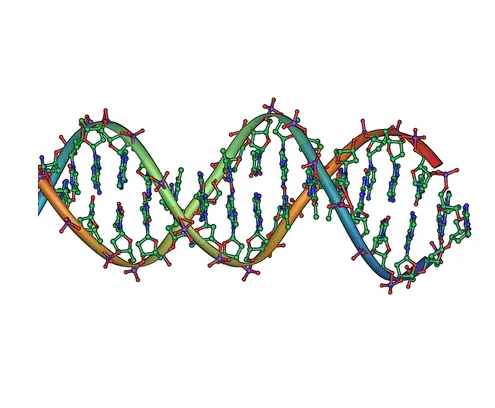
Photo: Jerome Walker, Public domain, via Wikimedia Commons
In the 1940s, a geneticist named Barbara McClintock observed something that the scientific establishment found deeply uncomfortable: certain genetic elements in maize appeared to move. They jumped from one chromosomal location to another, disrupting nearby genes and producing visible changes in kernel pigmentation. Her findings were met with skepticism for decades. When she finally received the Nobel Prize in Physiology or Medicine in 1983, the field had begun to accept what she had long insisted—that genomes are not static archives but dynamic, restless systems.
The entities McClintock described are now called transposable elements, and they constitute a far larger portion of the human genome than most people realize. Approximately 45 percent of human DNA is derived from transposable element sequences—a figure that dwarfs the roughly two percent occupied by protein-coding genes. For most of the twentieth century, these sequences were dismissed as evolutionary debris, the accumulated remnants of ancient genomic parasites with no meaningful role in human biology. That dismissal is now being systematically dismantled.
What Transposable Elements Actually Are
Transposable elements, often colloquially called jumping genes, are DNA sequences with the encoded capacity to replicate and insert copies of themselves into new locations within the genome. They are broadly divided into two classes based on their mechanism of movement. Class I elements, known as retrotransposons, operate through a "copy-and-paste" mechanism: they are first transcribed into RNA, then reverse-transcribed back into DNA and inserted elsewhere in the genome. The most abundant human retrotransposons belong to a family called LINE-1, or L1 elements, of which roughly 500,000 copies exist in the human genome, though only a small fraction retain the capacity for active transposition.
Class II elements, or DNA transposons, move through a "cut-and-paste" mechanism and are largely inactive in modern humans, though their remnant sequences are widespread.
The genome has evolved multiple layers of suppression to keep these elements in check. Epigenetic silencing mechanisms—particularly DNA methylation and certain histone modifications—normally keep transposable element sequences in a compacted, transcriptionally inactive state. But these suppression systems are imperfect, and they weaken under certain conditions: aging, cellular stress, and the widespread epigenetic disruption characteristic of cancer.
Transposable Elements in Cancer Biology
The connection between transposable element reactivation and cancer has been accumulating for years and is now supported by substantial evidence. In many human tumors, the global reduction in DNA methylation that accompanies malignant transformation allows previously silenced LINE-1 elements to become transcriptionally active. When active LINE-1 elements successfully transpose into new genomic locations, they can disrupt tumor suppressor genes, activate oncogenes, or introduce structural rearrangements that accelerate genomic instability.
Researchers have documented LINE-1 insertions in colorectal cancer, hepatocellular carcinoma, lung cancer, and several other tumor types. In some cases, specific insertions appear to be early events in tumor development rather than late consequences of genomic chaos, suggesting that transposable element reactivation may play a causal role in cancer initiation rather than simply accompanying it.
Beyond direct insertional mutagenesis, transposable element transcripts can trigger inflammatory signaling pathways. When LINE-1 RNA or the double-stranded DNA intermediates produced during retrotransposition accumulate in the cytoplasm, they can activate innate immune sensors—particularly the cGAS-STING pathway—that normally detect viral nucleic acids. The resulting chronic inflammatory state, sometimes called sterile inflammation, is increasingly recognized as a contributor to tumor progression and treatment resistance.
A Role in Neurodegeneration and Alzheimer's Disease
Perhaps the most striking recent development in transposable element research concerns the nervous system. The brain was long assumed to be particularly well-insulated against retrotransposition, given the post-mitotic nature of most neurons. But evidence has accumulated that LINE-1 activity occurs in neural progenitor cells during development, generating somatic mosaicism in the brain, and that this activity increases with age and under conditions of cellular stress.
In the context of Alzheimer's disease, studies have reported elevated expression of LINE-1 elements and other retrotransposons in affected brain regions. One hypothesis under active investigation is that the breakdown of epigenetic silencing in aging neurons—possibly accelerated by the accumulation of tau pathology or amyloid-related cellular stress—allows transposable elements to reactivate, triggering the cGAS-STING inflammatory cascade and contributing to the neuroinflammation that characterizes late-stage Alzheimer's pathology.
Similar observations have been reported in research on amyotrophic lateral sclerosis (ALS) and frontotemporal dementia, where elevated expression of endogenous retroviruses—a related class of transposable element—has been documented in patient tissue samples. The causality of these associations remains under investigation, but the convergence of findings across multiple neurodegenerative conditions has drawn considerable attention from researchers and funding agencies alike.
Aging, Senescence, and the Awakening Genome
The connection between transposable element reactivation and aging extends beyond any single disease. Cellular senescence—the state in which cells permanently exit the cell cycle in response to damage or stress—is now understood to be accompanied by widespread epigenetic changes that can permit transposable element transcription. The resulting activation of innate immune signaling contributes to what researchers call the senescence-associated secretory phenotype, a pattern of inflammatory molecule secretion that propagates tissue dysfunction in aging organs.
In this framework, transposable elements function as a kind of genomic time bomb, held in check by epigenetic suppression during youth and gradually escaping that suppression as the maintenance systems of aging cells deteriorate. The inflammatory consequences of their reactivation may contribute not only to specific diseases but to the systemic decline associated with normal aging.
Implications for Diagnostics and Therapy
The emerging understanding of transposable elements as active contributors to disease rather than passive genomic fossils carries concrete implications for medicine. On the diagnostic side, patterns of LINE-1 methylation and expression are being explored as potential biomarkers for cancer detection and staging—a use case that could leverage the fact that transposable element silencing is among the earliest epigenetic changes to occur in malignant cells.
Therapeutically, drugs originally developed to inhibit the reverse transcriptase enzyme in HIV—nucleoside reverse transcriptase inhibitors—have been repurposed in laboratory settings to suppress LINE-1 retrotransposition. Early experimental evidence suggests this approach can reduce inflammatory signaling in senescent cells and in mouse models of neurodegeneration, though human clinical data remain limited.
McClintock's restless genome, once a curiosity confined to maize kernels and the margins of scientific consensus, has become one of the most consequential areas of contemporary biology. Understanding how and when mobile DNA elements escape cellular control—and what that escape sets in motion—may prove essential to understanding some of the most prevalent and devastating diseases of the twenty-first century.