When DNA Contradicts the Family Tree: Understanding the Gap Between Genetic Ancestry and Oral History
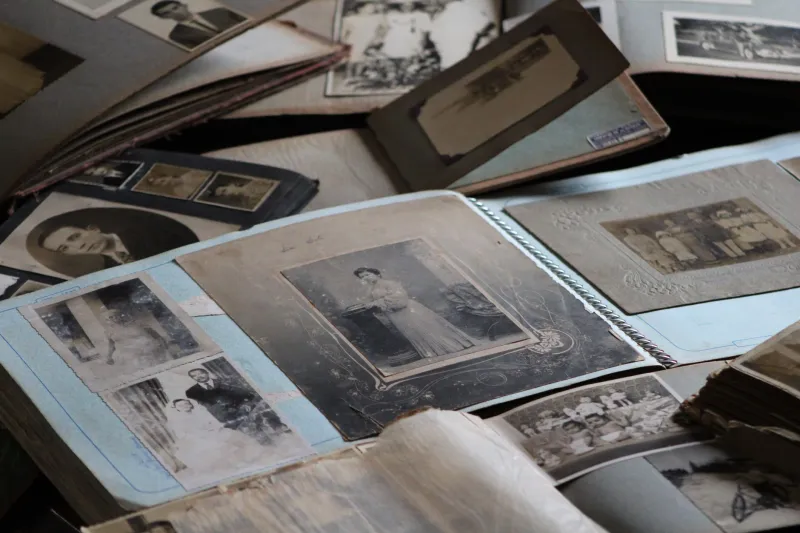
For generations, American families have passed down stories of their origins—the Irish great-grandmother who emigrated during the famine, the Cherokee ancestor celebrated at every Thanksgiving, the Sicilian grandfather whose village still bears the family name. These narratives form the connective tissue of identity. Then a consumer ancestry kit arrives, and the percentages on the screen tell a different story entirely.
This phenomenon is neither rare nor a sign of technological failure. It reflects something far more scientifically interesting: the fundamental complexity of human inheritance, the deep history of population movement, and the inherent limitations of both genetic and documentary records. For researchers in population genetics, these discrepancies are not anomalies to be corrected—they are data points illuminating the full, tangled arc of human prehistory.
What Ancestry Tests Actually Measure
Consumer genetic ancestry tests typically analyze hundreds of thousands of single nucleotide polymorphisms—positions in the genome where individuals commonly differ by a single DNA base. These variants are then compared against reference panels: curated databases of individuals whose ancestry from specific geographic regions is well-documented over several generations.
The resulting "ethnicity estimate" is not a direct reading of geographic origin. It is a probabilistic inference—a statistical best-fit comparison between your genomic profile and the patterns observed in those reference populations. Different companies use different reference panels, different algorithms, and different geographic groupings, which is why two tests from different providers can yield meaningfully different results for the same individual.
Moreover, what these panels represent is a modern snapshot of genetic variation. They cannot perfectly reconstruct the population structures of centuries past, because populations themselves have continued to move, intermingle, and change.
The Inheritance Lottery and Disappearing Ancestors
One of the most counterintuitive aspects of genetics is that ancestry does not transmit uniformly across generations. Each person inherits approximately 50 percent of their DNA from each parent—but which specific segments are passed on is largely random. This randomization, driven by the process of recombination during the formation of reproductive cells, means that genetic contributions from more distant ancestors can diminish dramatically or, in some cases, vanish entirely from a descendant's genome.
A great-great-grandparent contributes, on average, roughly 6.25 percent of your DNA. In practice, however, that figure can range from zero to well above the average. It is entirely possible—and statistically not uncommon—for an individual to carry no detectable DNA from a specific ancestor four or five generations back, even if the documentary genealogical record confirms that person's existence in the family line.
This statistical reality explains why a family with a well-documented Indigenous American ancestor may find no corresponding signal in a descendant's ancestry report. The ancestor existed. The genealogical record is accurate. The DNA simply was not passed forward in sufficient quantity to register against available reference populations.
The Complexity of Admixture Events
Beyond the inheritance lottery, ancestry test results frequently reveal evidence of admixture—the genetic blending that occurs when previously isolated populations come into sustained contact. American families are particularly susceptible to finding unexpected admixture signals, given the continent's history of forced migration, colonial settlement, and the deliberate suppression of certain ancestral identities.
Research in population genetics has documented, for example, that many Americans who identify as having exclusively European ancestry carry measurable proportions of African or Indigenous American DNA, often traceable to admixture events that occurred during the colonial and antebellum periods. Conversely, individuals with African American heritage frequently carry substantial European ancestry, reflecting the documented history of sexual coercion during slavery—a history that was rarely, if ever, incorporated into official family records or oral traditions.
These findings do not invalidate family stories. They contextualize them within a broader historical reality that documentary records were systematically designed to obscure.
Reference Panel Limitations and the Problem of Geographic Categories
Another source of discrepancy lies in how reference panels are constructed and how geographic categories are defined. The concept of "Irish" or "West African" or "East Asian" ancestry as a discrete genetic category is, from a scientific standpoint, a significant simplification. Human genetic variation exists on a continuum, and the boundaries between population clusters are gradients, not walls.
Reference panels are also not globally comprehensive. Populations from certain regions—particularly parts of Central Asia, the Pacific Islands, and rural sub-Saharan Africa—remain underrepresented in commercial databases. When a test encounters DNA patterns that do not match well-represented reference populations, it may assign that variation to a neighboring or broadly defined category, producing results that appear geographically imprecise.
For individuals whose ancestry derives from regions with historically lower participation in genetic research, this limitation can produce results that feel particularly disconnected from known family history.
What Oral Histories Preserve That DNA Cannot
It would be a mistake to conclude from this analysis that genetic ancestry tests are more reliable than family oral traditions. The two record types preserve fundamentally different kinds of information.
Oral histories encode cultural affiliation, religious identity, language community, and lived social experience. A family that identified as Cherokee for generations, regardless of what any genetic test might indicate, was shaped by that identity—its practices, its relationships, its relationship to land and community. Genetic ancestry tests measure biological descent through specific genomic segments. They say nothing about cultural belonging, legal tribal membership, or the social meaning of identity.
Genealogical records, meanwhile, preserve legal and ecclesiastical documentation of family relationships as recognized by the institutions that created those records. Those institutions had their own interests and limitations. Birth certificates, census records, and church registries reflect the categories and biases of the societies that generated them, not the full complexity of the families they documented.
Toward a More Informed Interpretation
For individuals navigating the gap between their genetic results and their family narratives, population geneticists and genetic counselors consistently offer a similar framework: treat the results as one data source among several, not as a definitive correction of everything that came before.
Genetic ancestry estimates are most informative when interpreted at broad geographic scales and over long time horizons. They are least reliable as precise ethnic identifiers or as tools for confirming or denying specific family stories from the past two or three centuries. The probabilistic nature of both the inheritance process and the testing methodology means that uncertainty is not a flaw in the system—it is an intrinsic feature of the science.
For researchers, these same discrepancies represent a productive frontier. The systematic study of how genetic ancestry data diverges from genealogical and oral records is generating new insights into migration patterns, historical admixture events, and the population dynamics that shaped the modern world. The family stories and the DNA are not in competition. Read together, with appropriate scientific humility, they offer a richer account of human history than either could provide alone.