Methylation, Mortality, and Molecular Clocks: What Your DNA's Chemical Tags Reveal About How Fast You're Aging
Age has always been a number. It appears on driver's licenses, insurance forms, and birthday cakes. But for molecular biologists, that number has long felt incomplete—a crude approximation of something far more nuanced happening inside every cell of the human body. Over the past decade, a class of genomic tools known as epigenetic clocks has begun to offer something more precise: a biological reading of how much time your cells have actually experienced, independent of the calendar on the wall.
The implications for preventive medicine, longevity research, and our broader understanding of human health are considerable. Yet the science, while genuinely exciting, also demands careful interpretation. What do these clocks actually measure, and what can they—and cannot—tell us about our futures?
The Chemistry Beneath the Sequence
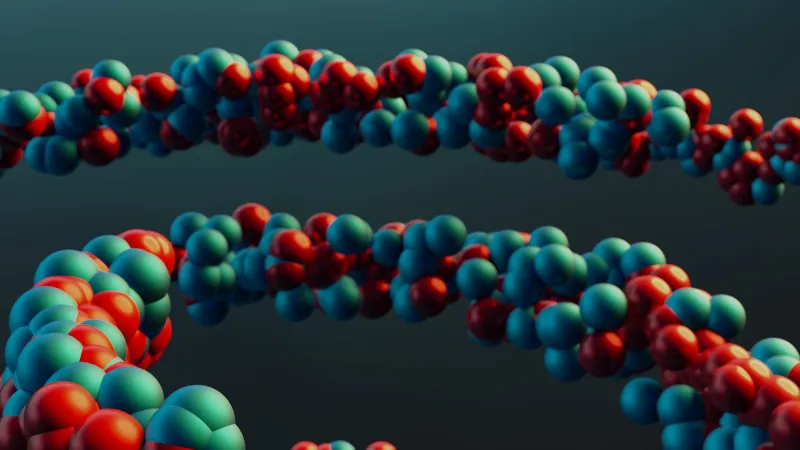
To understand epigenetic clocks, one must first appreciate what epigenetics means in practice. While the DNA sequence itself encodes the fundamental instructions of life, a parallel layer of chemical annotations sits atop that sequence, regulating which genes are active and which remain silent. Among the most extensively studied of these modifications is DNA methylation—the addition of a methyl group (a small carbon-hydrogen cluster) to specific sites along the genome, most commonly at cytosine bases adjacent to guanine, known as CpG sites.
Methylation patterns are not static. They shift in response to environmental exposures, lifestyle factors, developmental cues, and—critically—aging. As cells divide and decades accumulate, the methylation landscape of the genome drifts in predictable ways. Certain sites become hypermethylated; others lose their chemical tags. Researchers discovered that these drifts are consistent enough across individuals to function as a kind of molecular timestamp.
In 2013, biostatistician Steve Horvath at UCLA published a landmark study identifying 353 CpG sites whose combined methylation state could predict a person's chronological age with remarkable accuracy across multiple tissue types. This model, now widely called the Horvath Clock, marked the formal beginning of the epigenetic clock era.
From First-Generation Clocks to Biological Age
Horvath's original clock was trained to estimate chronological age—essentially, how old someone is. But subsequent researchers recognized a more compelling question: could methylation data predict not just when a person was born, but how rapidly their biology is deteriorating?
This distinction gave rise to second-generation epigenetic clocks designed to capture biological age rather than chronological age. The most prominent among these is the PhenoAge clock, developed by Morgan Levine and colleagues, which incorporates clinical biomarkers associated with morbidity and mortality. Another influential model, GrimAge, was specifically engineered to predict time-to-death and disease onset, drawing on plasma protein levels alongside methylation data.
When a person's epigenetic age exceeds their chronological age—a condition researchers term "epigenetic age acceleration"—studies have associated that gap with elevated risks for cardiovascular disease, certain cancers, cognitive decline, and all-cause mortality. Conversely, individuals whose biological age trails their chronological age appear, on average, to enjoy better health outcomes.
It is worth pausing here to note a critical distinction: association is not causation. The clocks identify correlations between methylation patterns and health trajectories; they do not yet establish that the methylation changes themselves drive aging or disease. Whether these marks are causes, consequences, or merely co-travelers of the aging process remains an active and unresolved question in the field.
What the Research Actually Shows
Population-level findings from epigenetic clock studies have yielded some striking patterns. Data from large cohorts suggest that factors long associated with poor health—smoking, obesity, sedentary behavior, chronic psychological stress, and socioeconomic disadvantage—are also associated with accelerated epigenetic aging. Conversely, regular physical activity, a diet rich in whole foods, and certain pharmacological interventions have been linked to slower epigenetic aging in observational research.
The CALERIE trial, which examined the effects of sustained caloric restriction in healthy American adults, found measurable reductions in epigenetic age acceleration among participants who reduced caloric intake by approximately 25 percent over two years. Similarly, research into the drug rapamycin—an mTOR inhibitor already approved for transplant medicine—has shown epigenetic age-slowing effects in animal models, fueling significant interest in its potential geroscience applications.
Perhaps most provocatively, a small pilot study by researcher Greg Fahy and colleagues reported epigenetic age reversal in a cohort of older men who underwent a regimen combining human growth hormone, DHEA, and metformin. The findings generated considerable media attention, though the scientific community has urged caution given the study's limited scale and absence of a control group.
The Limits Clinicians and Patients Must Understand
For healthcare professionals considering the relevance of epigenetic clocks to clinical practice, several limitations warrant emphasis. First, measurement variability remains a challenge: methylation data can differ depending on the tissue sampled, the laboratory processing the specimen, and the specific clock algorithm applied. A blood-based reading does not necessarily reflect epigenetic aging in the brain, liver, or heart.
Second, the clocks are population-level statistical tools. They were derived from and validated against large groups, and their predictive value for any single individual is inherently less precise. An epigenetic age acceleration of three years does not translate to a clinician's ability to say, with confidence, that a specific patient will develop a specific condition at a specific time.
Third, the commercial landscape around biological age testing has expanded rapidly, and not all products on the market adhere to the same scientific rigor as peer-reviewed research tools. Patients who seek out direct-to-consumer epigenetic age tests should be encouraged to discuss results with a qualified clinician rather than drawing independent conclusions about their health trajectory.
A Frontier With Genuine Promise
None of these caveats diminish the genuine scientific achievement that epigenetic clocks represent. For the first time, researchers possess quantitative, reproducible tools to study aging as a biological process rather than merely a chronological one. This capacity is already accelerating clinical trial design: biological age metrics allow investigators to detect interventional effects that would otherwise require years of follow-up and far larger sample sizes.
Looking ahead, the integration of epigenetic clock data with other omics layers—proteomics, metabolomics, transcriptomics—promises composite aging biomarkers of even greater predictive power. The emerging field of geroscience, which frames aging itself as a modifiable risk factor rather than an inevitable backdrop to disease, depends heavily on these molecular tools to define its targets and measure its progress.
For the genetics and biology communities, epigenetic clocks represent exactly the kind of conceptual leap that reframes long-standing questions. They remind us that the genome is not a fixed fate but a dynamic document, annotated and re-annotated throughout a lifetime by the accumulated weight of biology, environment, and experience. Understanding those annotations—and learning to interpret what they reveal about cellular time—may prove to be one of the most consequential scientific projects of the coming decades.