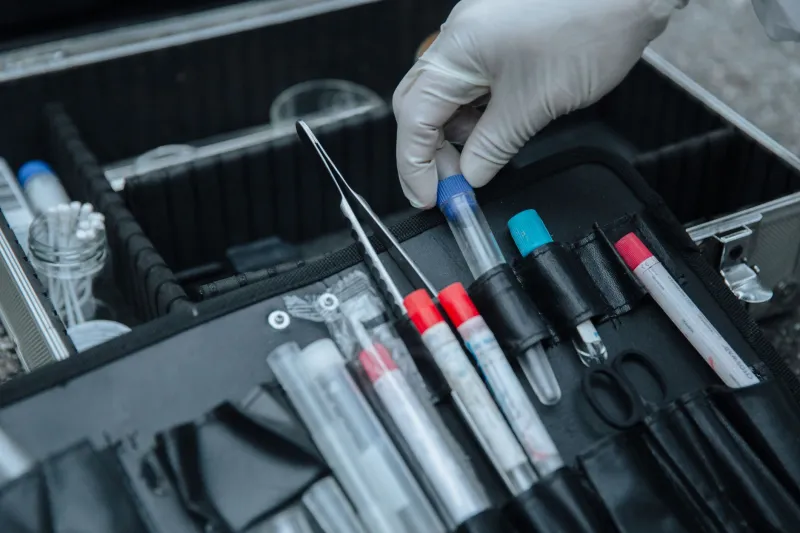
Where the Pipette Meets the Promise: Inside the Community College Labs Powering American Genomics
When a new sequencing facility opens in suburban Ohio or a cell therapy manufacturer breaks ground in North Carolina, the announcement usually celebrates PhD scientists and venture capital. What rarely makes the press release is the row of bench technicians who will actually run the instruments, prep the libraries, and keep quality control on schedule. Increasingly, those technicians are graduates of community college programs — institutions that have become the unglamorous backbone of American genomics.
The Demand No One Planned For
The geography of genomics has shifted. What was once concentrated in a handful of coastal hubs has dispersed through state-backed biomanufacturing initiatives, hospital system expansions, and agricultural genomics programs across the Midwest and Southeast. The Bureau of Labor Statistics projects steady growth for biological technicians over the next decade, and industry surveys routinely list lab staffing among the top bottlenecks for expanding companies.
Four-year research universities were never positioned to meet this demand. Their graduates, often trained for independent research careers, frequently leave laboratory work within a few years. Two-year institutions, by contrast, built their programs around a simple question: what does an employer actually need on Monday morning?
Curricula Built Backwards from the Bench
Visit a well-regarded biotechnology program at a community college and the difference is immediately visible. Students learn good laboratory practice documentation, aseptic technique, pipette calibration, and instrument troubleshooting before they ever touch a peer-reviewed paper. Many programs incorporate next-generation sequencing sample preparation, polymerase chain reaction workflows, and basic bioinformatics — skills that map directly onto job postings from sequencing core facilities and biopharmaceutical manufacturers.
Partnerships matter as much as pedagogy. Advisory boards staffed by local employers shape course content; internships at nearby companies frequently convert into full-time offers. In several states, community colleges have partnered with national laboratories and large sequencing operations to create stacked credential programs that let working students move from certificate to associate degree without stepping out of the workforce.
Who Enrolls, and Why It Matters
The demographic profile of community college students looks almost nothing like that of elite research universities. These enrollments skew older, more likely to be working, more likely to be first-generation college students, and considerably more racially and economically diverse. For a field that has publicly committed — in national reports and funding agency strategic plans alike — to broadening participation in genomics, this is not a footnote. It is the mechanism.
A student completing a lab science certificate at a community college in Fresno or Kansas City may be the first in her family to work in science at all. She is also, statistically, far more likely to stay in the region, meaning the technical workforce built around her will remain rooted in the communities where the new facilities actually operate.
The Credibility Gap
The persistent obstacle is perception. Parents, high school counselors, and even university faculty often treat two-year programs as remedial detours rather than legitimate professional pathways. Employers who have hired program graduates know better: supervisors consistently describe community college technicians as better prepared for regulated laboratory environments than many bachelor's degree holders, precisely because the training is procedural rather than theoretical.
Faculty in these programs face their own constraints — equipment costs, industry salaries that outpace teaching pay, and the constant need to update curricula as instrumentation changes. Sustaining these programs requires deliberate investment, not the assumption that the pipeline will maintain itself.
A Workforce Argument Worth Making
The genomics enterprise has an uncomfortable habit of celebrating discovery while neglecting infrastructure. Technicians are infrastructure. Every clinical sequencing report that reaches a patient, every biobank sample that is processed correctly, depends on people trained to do exacting work for wages that rarely reflect the stakes.
If the United States intends to democratize access to genomic medicine, the training pipeline that matters most may not be the one ending in a doctorate. It may run through a two-year campus with a used thermal cycler, an instructor who spent a decade in industry, and a classroom of students who could not afford to wait for a more prestigious door to open. The field should say so plainly — and fund accordingly.