Custodians of Ourselves: Tracing What Really Happens to Donated DNA When Institutions Change Hands
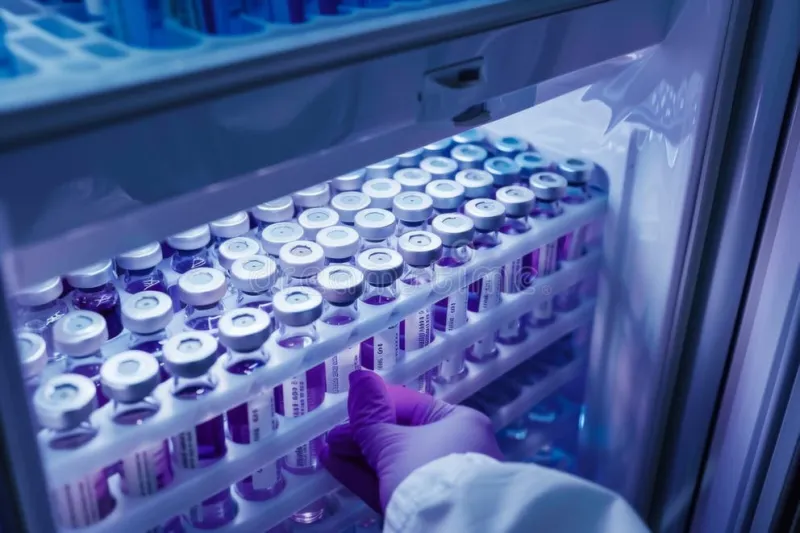
Photo: biobank freezer storage vials laboratory samples rows, via thumbs.dreamstime.com
Every biobank sample begins with a signature. A participant reads — or more often skims — a consent form, initials a few boxes, and allows a few milliliters of blood or a vial of cells to enter an institutional freezer. The transaction feels final and well-protected. The reality is more complicated, because the institution holding the sample is not guaranteed to exist in the form it occupied on the day of donation.
The Lifecycle Problem
Biobanks are embedded in institutions, and institutions change. Universities consolidate programs. Hospitals merge with larger systems. Companies built around donated data are acquired, pivot, or file for bankruptcy. Each of these events raises the same underlying question: who now holds the obligation to the donor?
Consent forms usually name an entity, not a permanent custodian. When that entity is reorganized, samples may transfer to a successor institution, a purchasing company, or in the worst cases, an asset sale in bankruptcy court. Legal scholars who study biobank governance note that donated samples occupy an unusual position — they are not straightforward property of the donor, yet the donor retains interests that are moral, and increasingly statutory, even after the physical sample changes hands.
What Bankruptcy Reveals
The sharpest test cases have involved consumer genetics and health data companies. When such firms have collapsed, the disposition of biological samples and sequence data became a matter for courts and regulators, not for the participants who provided them. In several high-profile situations, privacy advocates intervened to demand destruction of data rather than sale to the highest bidder. The outcome often hinged on the specific language of the privacy policy — language most users never read closely.
Bankruptcy law treats customer data as an asset that can be sold unless the company's own published commitments prevent it. That means the promises a participant relied upon at donation time are only as durable as the corporate documentation behind them.
What Participants Are Actually Promised
Reading a biobank consent form with a lawyer's eye reveals a handful of recurring clauses worth understanding:
- Permitted future uses. Many forms allow samples to be used for unspecified future research, sometimes with re-consent, sometimes without.
- Data sharing. Look for language about depositing de-identified data into controlled-access repositories, and note that de-identification of genomic data is inherently imperfect.
- Commercialization. Some forms grant the institution or a commercial partner rights to develop products from donations, typically without compensation to the donor.
- Withdrawal. Most forms promise the right to withdraw, but withdrawal frequently means no future use — existing data may already be distributed and irretrievable.
- Transfer clauses. The quietest and most consequential language covers what happens if the program ends, merges, or is sold.
A Practical Guide for Donors
Prospective participants can protect themselves with a modest amount of scrutiny. Before donating, ask three questions: Who is the legal entity receiving the sample, and is it a nonprofit with public governance or a private company? What does the form say happens to the sample and data if that entity ceases operations? And does withdrawal actually remove data from shared repositories, or only from future studies?
For those who have already donated, most institutions will provide their current policies on request, and participants in federally funded programs can often trace their consent terms through publicly posted governance documents.
Toward Durable Promises
The deeper fix is structural. Some states have strengthened genetic privacy statutes to restrict transfer of genetic data in commercial transactions, and federal frameworks for health data privacy continue to evolve. Ethicists have proposed that biobanks adopt explicit custodianship plans — designated successors, mandated sample destruction on dissolution, and independent oversight — as a condition of operation.
Donation to biobanks remains one of the more generous acts in modern science, and the research it enables is genuinely valuable. But generosity deserves stewardship. A promise made in a consent form should survive reorganizations, mergers, and even the end of the organization that made it. Until that is the default rather than the exception, the paper trail behind every sample deserves a careful reading.